Our approach
How we work with AI
People and Agentic CORE
More than a standalone question to ChatGPT or Claude.
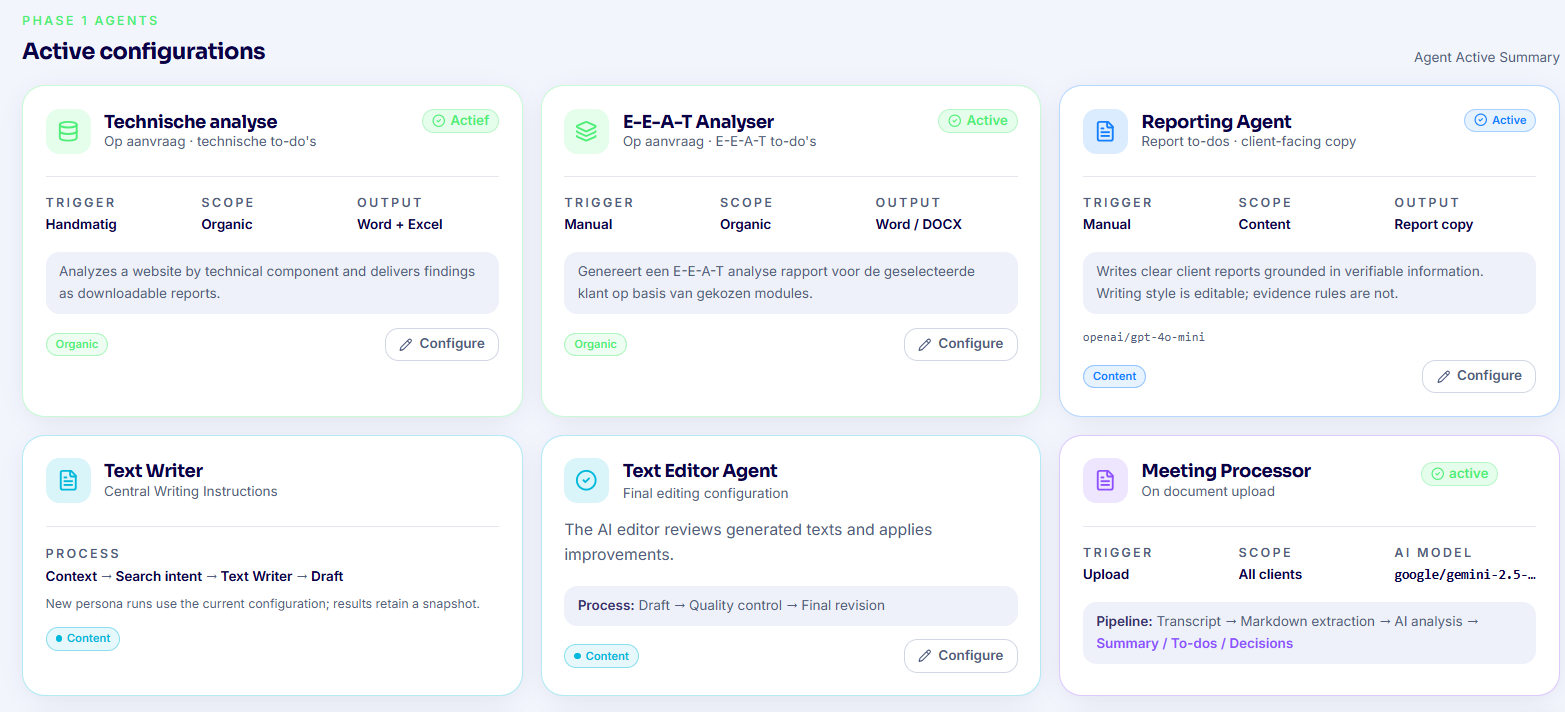
CORE is our own layer that brings together the information and tools for a project. History, meetings, documents, feedback, relevant project information and results form its accumulated context. The tools needed are connected to the work, so specialists do not have to repeatedly consolidate information from separate files and systems.
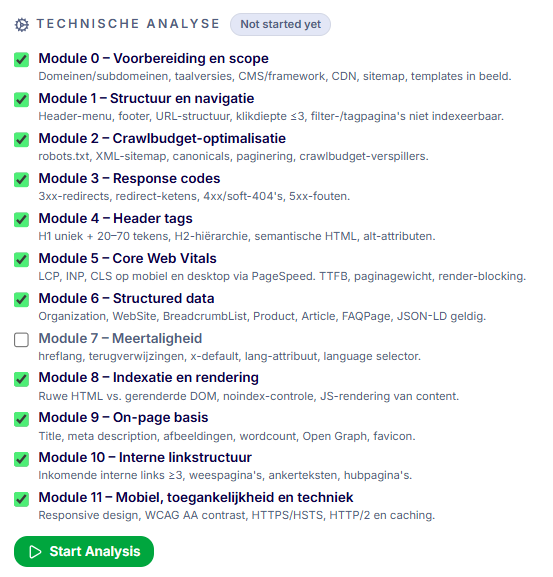
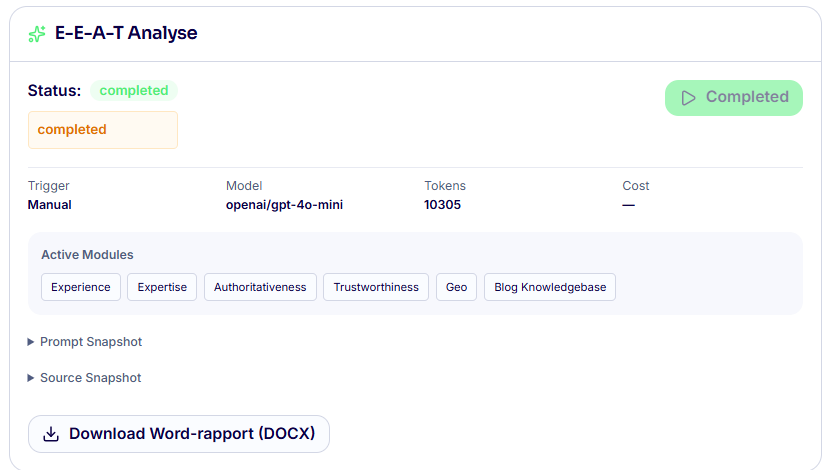
An agent is a defined process that uses this context and these tools to support a task, such as preparing a technical analysis, developing a report or organising meeting notes. The specialist sets the question, sources and boundaries, assesses the output and decides what happens next.
ChatGPT and Claude can be valuable tools and also offer their own capabilities for context and integrations. The difference is not solely the language model, but how Aspen organises context, integrations, workflows and expertise around your project. You receive more than an AI answer: a team that relates it to your organisation and takes responsibility for decisions and execution.
Recorded knowledge helps the work move forward.
Decisions, feedback and previous analyses remain part of the project context. This helps the team build on what is already known, respond more closely to your situation and spend less time reconstructing earlier conversations. Recorded knowledge also supports handovers between specialists and continuity in the work.
Within projects, we learn from what works and what needs adjustment. Experience across projects and industries helps us improve shared working methods and apply relevant knowledge. This does not mean autonomously training a model on client data. Confidential client information is not shared with other clients, and one client cannot access another client’s context.
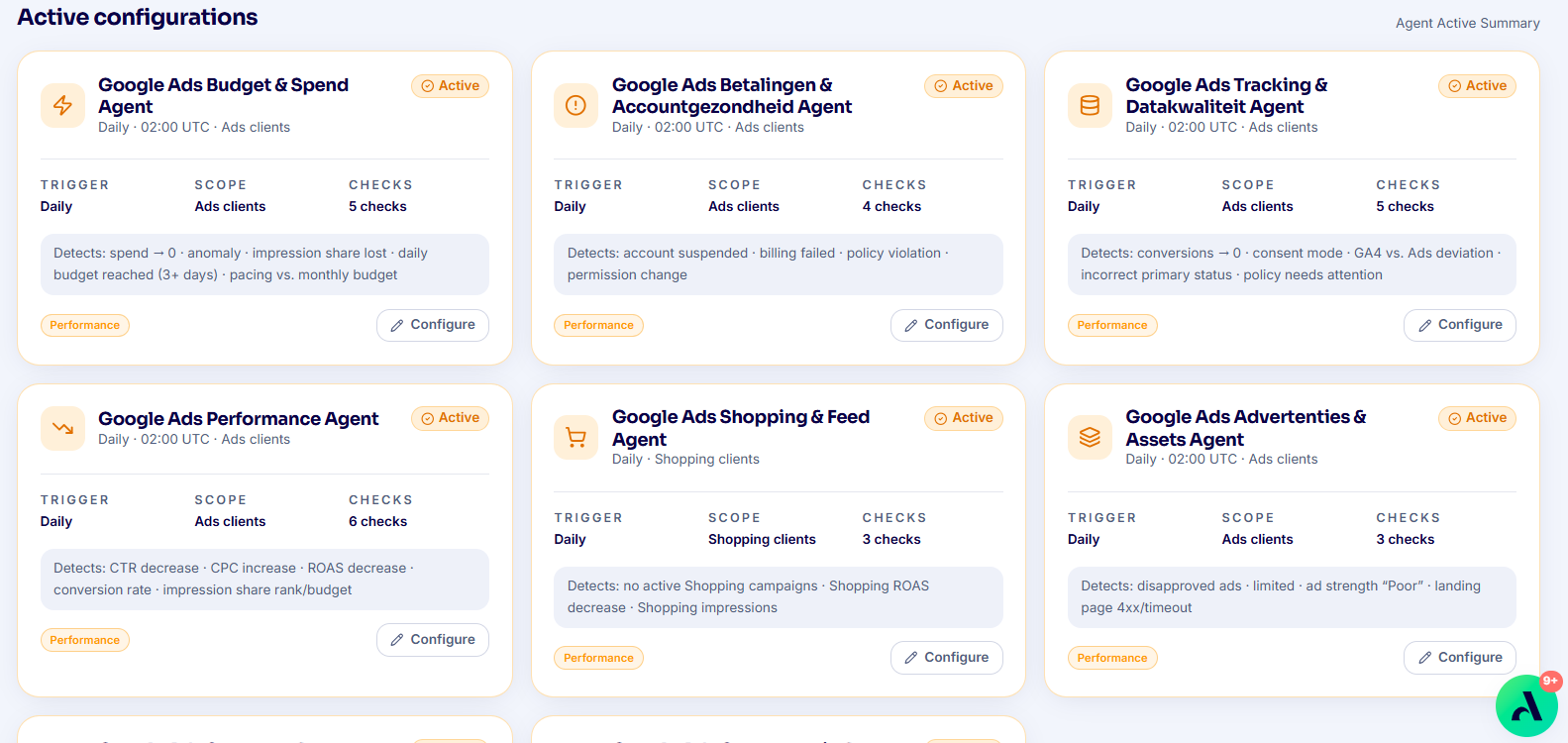
The screenshots below illustrate the configuration of CORE. Visible statuses are snapshots, not current monitoring or evidence of client results.
From question to practical work
From research to practical work and review.
We use AI to investigate search queries, develop content and compare performance. Its role depends on the question. When conventional analysis or measurement tools are sufficient, there is no need to use AI.
The brief starts with your goal and the information relevant to it: which customers you want to reach, what you offer, the questions they ask and what is already on your website. That context determines what we ask AI to investigate or develop.
A focused brief also sets boundaries. Which sources take precedence? Which product details are established? What tone fits your brand? Which question should the output answer? This lets us assess not just whether an answer sounds good, but whether it is useful for the work.
- 01
Research and identifying changes
We review search queries, existing pages and visibility data. AI helps organise information, group related questions and explore differences between texts or topics. This gives us starting points: which customer questions remain unanswered and which pages need further investigation?
The specialist checks those starting points against the original data and your offering. High search volume does not automatically make a topic relevant. The assessment also considers the visitor’s intent, the information available and what your business can actually offer. This informs the priorities and content brief.
- 02
Content and optimisation
Using that brief, we work with AI on an initial text structure, different ways to phrase the content, page titles and meta descriptions. Search intent, product information and brand context provide the starting point. A variation is material to work with, not text that goes straight onto the website.
Our specialists compare the variations and edit the content. They add missing explanations, remove unsubstantiated statements and check whether the page answers the visitor’s question. The relationship between the title, description and page matters too. The final text and approval for publication remain human decisions.
- 03
Measure and review
After a change, we look at the measures relevant to the question, such as click-through rate, rankings and visibility in AI answers. AI can help summarise measurement data and explore differences between periods or pages. A noticeable change is a reason to investigate, not yet an explanation.
The specialist investigates what has changed and which conclusions the data supports. A better ranking does not prove that one text change caused it. Based on that assessment, we decide what to retain, adjust or investigate further. An AI summary does not carry out those changes independently.
From insight to a decision
Which visitors become your customers?
Suppose your website attracts visitors, but the enquiries do not closely match what you offer. More traffic is not automatically the answer. First, we want to understand where that mismatch occurs.
We review the search queries bringing visitors in, what the corresponding pages explain and which questions come up in conversations with potential customers. A search term can attract many visitors while those visitors are looking for something other than your services.
AI can help group those queries by topic and intent. Questions about doing something yourself can then be considered alongside questions about choosing a supplier. The specialist investigates whether that distinction also fits the pages, the enquiries and the customers you want to reach.
If people choosing a supplier are not getting enough information, the decision could be to improve existing service pages instead of writing more general articles. We then explain which situations your service suits, what the approach involves and what someone needs to know before making an enquiry. Afterwards, we assess whether the enquiries fit your offering better, not just whether visitor numbers have increased.
An illustration of our approach, not a client case study.
The role of AI
Check the substance, not just the wording.
Working with recorded sources and project context helps reduce unsubstantiated answers, but does not prevent AI from hallucinating. A convincing answer can still be incorrect. We therefore assess facts, sources and reasoning, not just language and tone. Does the data support the conclusion? Is it clear what is an observation and what is an assumption? Does the suggestion fit the client’s question and brand?
When information is missing or sources contradict each other, a fluent AI answer is not a solution. Anything we cannot substantiate needs further investigation or is not used. The specialist remains responsible for strategy, editorial approval and decisions about execution.
Our own tooling and AI are not the same thing, either. A tool can measure rankings or collect data without using AI. We distinguish those measurements from support with analysis or drafting, and from the decision that follows. We do not attribute a client result to AI simply because tooling was used.
Identify and assess
Monitoring supports the specialist, including outside working hours.
CORE supports 24/7 automated alerts on connected measurement points. We also use scheduled checks, such as daily Google Ads checks on budget, account health, tracking, performance, feeds and advertisements. Coverage and frequency depend on the connected sources and configured checks.
Monitoring does not mean that a person is continuously watching, that every issue is detected or that a problem is resolved immediately. An alert is a reason to assess what has changed, what it means for your goal and what action is needed. Our specialists set the priority and handle the follow-up.
What does your situation need?
Tell us what you are facing. We can discuss the expertise and approach needed, and where supporting tools could help.